01 · Service design · Wayfinding
Station Seedha Raasta
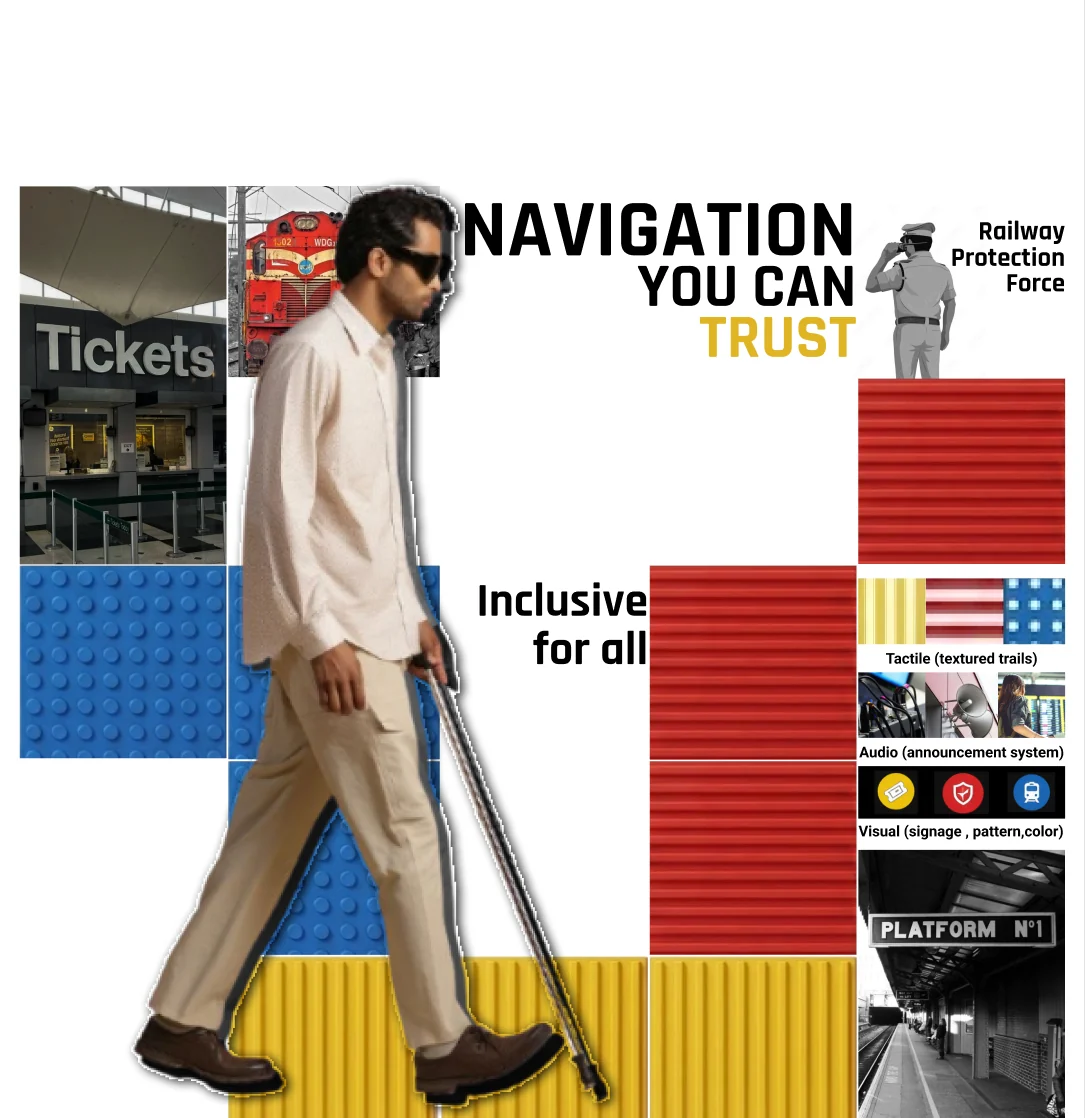
A low-tech wayfinding service that gives railway passengers the right information before each decision point, from the station entrance to the correct coach.
01
The service
The outcome is a service, not an app: boards, floor trails, a ticket sleeve and staff routines that work without a smartphone, reading ability or electricity.
02
Problem
Displays are outdated, announcements are hard to hear and signage is missing. The critical point is timing: navigation information appears only after passengers have already chosen a direction.
03
Field research
We did our field research at Chandigarh Railway Station. We observed and interviewed across three touchpoints, ticketing, security and platform navigation, and spoke with passengers, a police officer, a ticket examiner, a security guard and cleaning staff.
- Information that arrives after the decision point has no navigation value.Timing matters as much as content.
- Anxiety is a trust failure, not a knowledge failure.More information makes it worse if people don’t believe the source.
- The first thirty seconds decide whether a passenger navigates alone or depends on others.
04
Behind it
05
Reflection
What I would change: our deck presented expected impact with confident numbers. They were projections, and I now label them that way. The next step is a small trial of one element, such as the compass board, with first-time passengers.
What I learned: service design is mostly about who does what, and when. The chalk board only works if a named person updates it and signs the time.