02 · Mobile app design · Event concierge
Taj Experience
A concept app for planning a celebration with a Taj event consultant: pick the occasion, browse decor, food and videography, choose a consultant, book a date and pay the consulting fee.
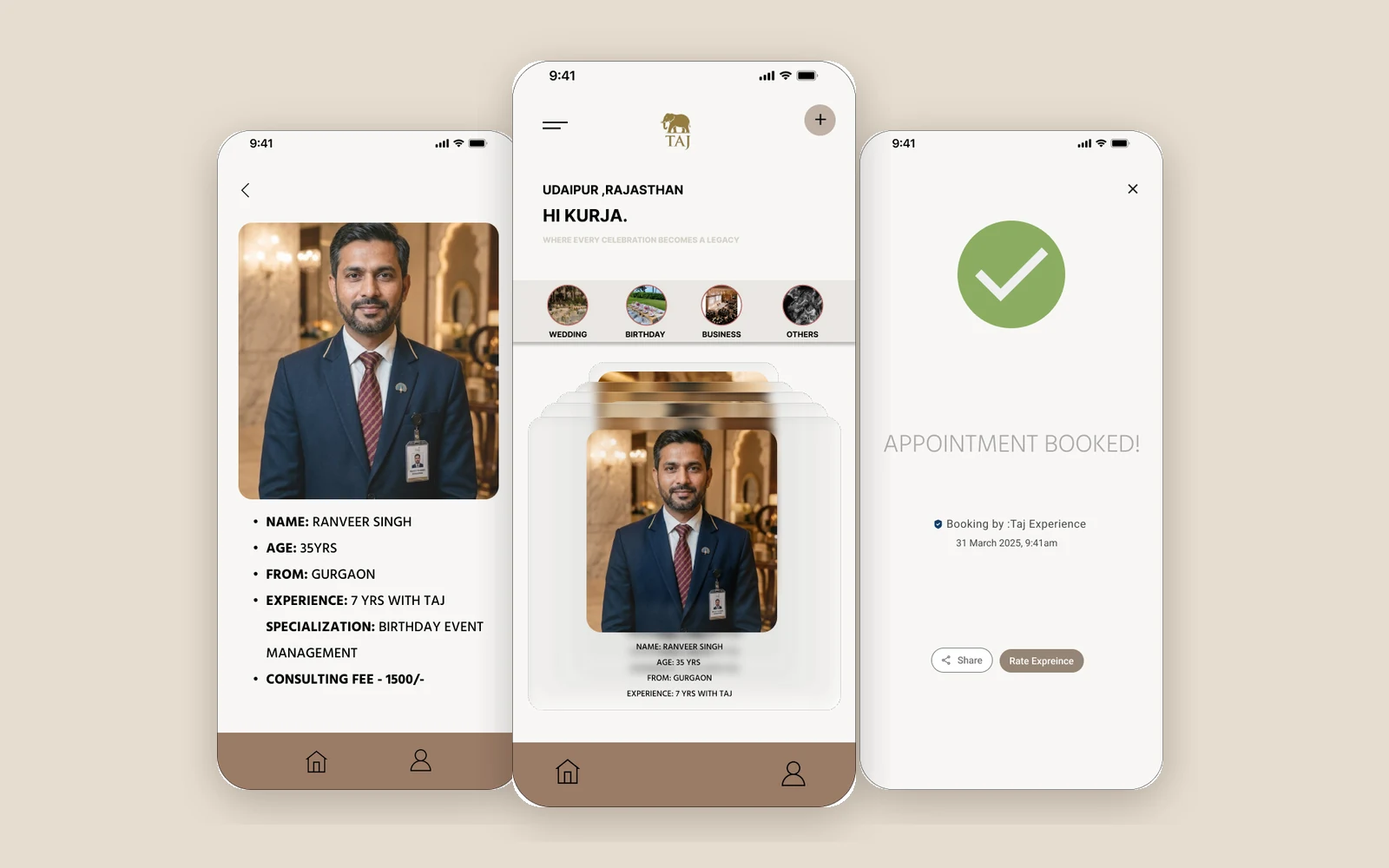
01
Final screens
- A person before a catalogue.The home screen leads with a consultant, and occasions sit above it as four clear choices.
- The fee is visible before you commit.Each consultant profile states experience, specialisation and the consulting fee.
- Language comes first.The app asks for a preferred language at the start, with Hindi and regional options.
02
Problem
The brief was a luxury event-planning service. People planning a large event compare many separate services, and the platforms we reviewed are good at discovery but weak on verified vendors, clear pricing and any guarantee that the day will run as promised. We designed an app where a named consultant, not a list of vendors, is the starting point.
03
Process
We wrote a discussion guide for each of six user groups, from families planning a wedding to people booking corporate events. Each group then got its own flow before we chose what to build.
04
Reflection
Where it stops: the built app covers consultant booking only. Venue discovery, packages and the trust dashboard were mapped but not built, and nothing has been tested with users.
What I would fix: the calendar and the confirmation screen show different dates, a few labels have spelling mistakes, and the consultant cards list age and home town, which do not help anyone choose. The payment step is a generic bank transfer and deserves a rethink for this audience.
What I learned: mapping six flows was useful, but we built only one of them. Next time I would pick the flow earlier and spend the saved time testing it with people who are actually planning an event.